Introduction
UVC LED selection is not defined by a single specification. A practical UVC LED selection guide should start with the available UVC LED wavelength, optical power, radiation angle, and package size, then match these parameters to the intended application. This article explains how to select a UVC LED by moving from product parameters to application requirements and, finally, the appropriate level of product integration.
Start with the UVC LED Specifications That Match Your Product
UVC LED selection should begin with the specifications that directly define how the light source fits into the target product.
UVC LED Wavelength
UVC LEDs are offered across the 260–280 nm range, with individual models covering different peak wavelength ranges. For UVC LED wavelength selection, engineers should first identify the wavelength range required by the target product, then compare the corresponding models and their other optical specifications.
Optical Power
The available optical power extends from 6 mW to 1000 mW, covering both low-power UVC LED models for compact products and high-power emitters for applications requiring greater UVC output. Rather than selecting the highest available power by default, product developers should determine the required UVC output for the equipment and then select a model within the appropriate power range.
Radiation Angle
30°, 60°, and 120° radiation angles are provided, allowing the light distribution to be matched to different installation layouts. The choice should be made alongside the position of the LED, the available installation space, and the intended irradiation area so that the selected optical pattern fits the product`s internal structure.
Package Size
The UVC LED portfolio includes 3.5 × 3.5 mm standard packages delivering 650–1000 mW and a 6.5 × 6.5 mm high-power package covering multiple lower-power configurations. Package selection therefore needs to account for both available installation space and the optical power required by the product.
Match the UVC LED to Your Application
UVC LED selection is generally organized around five UVC LED application groups, covering water disinfection, home appliances and HVAC, automotive, biomedicine and chemical synthesis, and industrial UV curing. Each group calls for a different combination of LED, module, or system-level integration.
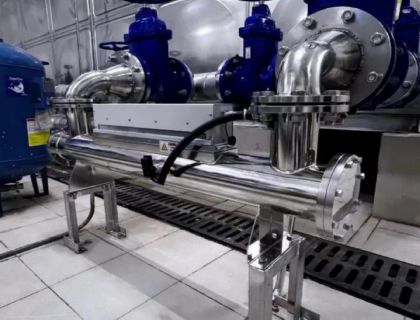
Water treatment represents one of the broadest application areas, ranging from household water purification to industrial and municipal systems. UVC LED solutions are offered for consumer and residential disinfection, water appliances, medical and laboratory pure water systems, food and beverage water quality control, agriculture and recirculating aquaculture, and pharmaceutical water systems. Its portfolio covers flow rates from 0.5 L/min to 50 L/min and 3 m³/h to 120 m³/h, with solutions including low-flow water flow modules, static water modules, and high-flow water disinfection equipment. For product developers working on a UVC LED for water disinfection, the appropriate starting point can therefore range from a compact module for a UVC LED water purifier to a complete high-flow treatment system.
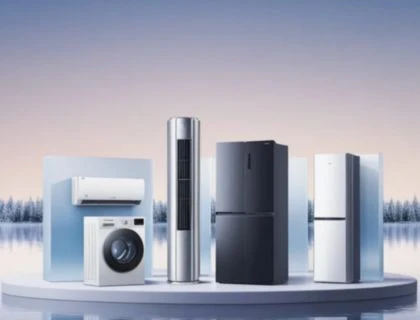
For household equipment, UVC LED integration extends across large home appliances, kitchen and bathroom appliances, environmental and cleaning appliances, personal care appliances, maternal and baby appliances, water treatment appliances, and HVAC systems. Applications include air conditioners, washing machines, refrigerators, water purifiers, dishwashers, smart toilets, air purifiers, humidifiers, toothbrush sterilizers, and other compact devices. Application-specific modules are provided as well as optical and thermal integration support, making factors such as installation space, module dimensions, and operating requirements relevant when selecting a UVC LED for HVAC, UVC LED for air disinfection, or UVC LED module for home appliances.
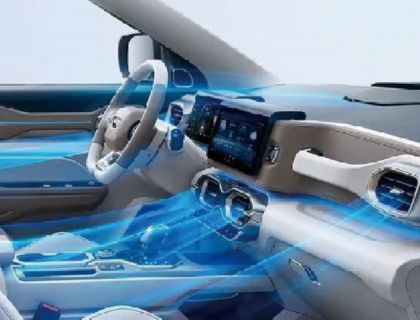
Automotive applications require UVC LED solutions that can be integrated into vehicle-specific architectures. The automotive portfolio covers HVAC air disinfection and odor control, cabin high-touch surface sterilization, UVC LED + MOFs integrated cabin air purification, and vehicle refrigerator hygiene and odor control. The available solutions include automotive-grade UVC LED modules with configurable wavelength, beam angle, dimensions, installation methods, and control logic, allowing manufacturers to align the light source and module structure with different vehicle applications. The automotive product range is also supported by AEC-Q102-qualified UV LED chips and an IATF 16949-compliant manufacturing system.
In biomedicine and chemical synthesis, UV LED technology moves beyond conventional disinfection into controlled photochemical processing. The solution covers biopharmaceutical applications and fine chemical synthesis, with systems designed for drug discovery, process development, continuous-flow photochemistry, API and key intermediate synthesis, and process scale-up. Its photochemical platform combines tunable LED illumination with controlled light, temperature, and fluid flow, while its system portfolio extends from laboratory photoreactors to pilot-scale continuous-flow reactors. For these applications, selecting a UVC LED system is therefore closely tied to the required light source and the overall reaction-system architecture.

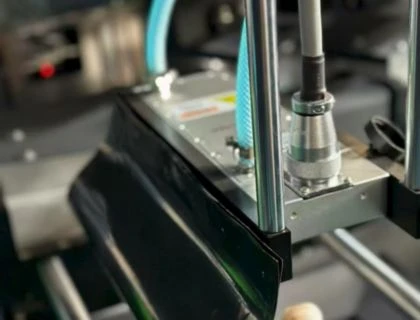
All-LED Curing is a separate industrial application category within the broader UV LED portfolio. It covers label printing, electronic adhesives, offset printing, screen printing, fiber coating, and digital printing, with additional applications in electronics, optical fiber, and lithium battery manufacturing. These systems use UV LED technology for curing rather than microbial disinfection, so they should not be treated as another UVC sterilization application. Instead, this solution category demonstrates how wavelength, optical output, light-field distribution, and system configuration can be adapted to different industrial processes, including customizable UVA / UVB / UVC output across 200–400 nm.
For product developers, the practical sequence is straightforward:
1. Identify the Application Category
2. Determine Requiring an Individual UVC LED / an Application-specific Module / a Complete System for the Project
Choose the Product Level for Your Development Stage
Not every UVC LED application requires the same level of product integration. The portfolio spans packaged UVC LEDs, application-specific modules, and complete systems, allowing manufacturers to start at the component level or move directly to a more integrated solution.

UVC LED
For manufacturers developing their own equipment, a packaged UVC LED provides the core light source for integration into a custom optical, electrical, or mechanical design. UVC LEDs are offered, covering 260–280 nm, with adjustable optical power from 6 mW to 1000 mW, radiation angles of 30°, 60°, and 120°, and package sizes of 3.5 × 3.5 mm and 6.5 × 6.5 mm. This range gives custom equipment developers multiple starting points when the LED itself needs to be incorporated into a proprietary product architecture.

UVC LED Module
A module becomes the more practical starting point when the disinfection function needs to be integrated into a defined product structure. Application-oriented modules are provided, including static water modules, water flow modules, air and surface sterilization modules, and automotive refrigerator UVC sterilization modules, moving the development path from an individual LED toward a ready-to-integrate functional unit.

UVC LED System
System-level products are intended for applications where the UVC function forms part of a larger treatment or production process. High-flow water disinfection, biomedicine and chemical synthesis, and all-LED curing are listed under its system portfolio, providing a higher level of integration than an individual LED or application-specific module.
This creates a clear development path: select a UVC LED when you need the light source itself, choose a module when the application requires a defined functional assembly, or evaluate a system when the treatment process calls for a complete solution.
Use the Product Matrix to Narrow Down the Right UVC LED
Once the application is defined, engineers can narrow the available UVC LED models by comparing wavelength, optical power, radiation angle, and package size. The product matrix covers multiple combinations of these specifications, allowing the selection to progress from the required light output and optical configuration to the appropriate product level for the final application.
|
Selection Parameter |
Available Options |
|
Peak Wavelength |
260–280 nm |
|
Optical Power |
6–1000 mW |
|
Radiation Angle |
30° / 60° / 120° |
|
Package Size |
3.5 × 3.5 mm / 6.5 × 6.5 mm |
|
Product Level |
UVC LED / Module / System |
|
Application |
Water / Home Appliance & HVAC / Automotive / Biomedicine & Chemical Synthesis / All-LED Curing |
The matrix reflects the specifications and product levels presented across UVC LED portfolio, including packaged LEDs, modules, and system solutions.
Check Customization and Supply Capability
Once the technical requirements have been narrowed down, supplier capability becomes the next consideration. For custom UVC LED equipment manufacturers, the relevant question is whether the supplier can support the required product level, customization scope, and production volume.


ODM Support
Tailor-made PCBA circuits, UVC LED modules, and integrated assemblies should be supported, with custom services for water disinfection, air purification, and other sterilization applications. This allows manufacturers to evaluate solutions beyond a standard LED component when their product requires customized integration.


Production & Supply Capability
For production planning, high-quality UVC LED manufacturers, such as UVLEDTEK, should have continuous R&D accumulation, a full in-house production chain, and an exceptionally high UVC LED WPE level above 13.5%. Monthly chip shipment capacity in the range of over 5 million units also provides a concrete reference for manufacturers evaluating long-term supply requirements and large-volume production.
How to Select a UVC LED: A Practical Decision Path
A practical UVC LED selection guide should move from the application itself to the required component and integration level.
Following this sequence makes how to select a UVC LED a structured engineering decision:
- Identify the Application
- Define the Required Wavelength Range
- Select the Optical Power Range
- Match the Radiation Angle
- Check Package Dimensions
- Decide LED / Module / System
- Confirm Customization & Supply Requirements
Conclusion
UVC LED selection should begin with the application requirements and then narrow the choice through key product parameters such as wavelength, optical power, radiation angle, and package size. Experienced UVC LED manufacturers should provide UVC LED products, modules, and system solutions to support different development stages and application requirements. For a more specific recommendation, share your application requirements with our experts to identify a suitable UVC LED solution.
Request for Customized UVC LED Projects