Introduction
Choosing UVC LED chip suppliers based solely on unit price and rated optical power can lead to an incomplete assessment of their long-term value. Buyers should also examine chip specifications, manufacturing capabilities, R&D resources, engineering support, and the commercial value these capabilities bring to product development and ongoing supply. A reliable UVC LED chip manufacturer should demonstrate not only consistent component performance but also the technical and production capabilities needed to support buyers beyond the initial purchase.
Compare UVC LED Chip Specifications and Performance
Buyers should compare optical output, wavelength, chip architecture, wall-plug efficiency, and expected lifetime under clearly defined operating conditions.

Optical Power & Wavelength
Check whether the supplier provides consistent wavelength and optical power data across its product range, such as 260–285 nm wavelengths and different output levels for specific chip models.
Chip Structure & Configuration
Examine the chip dimensions, Flip-Chip architecture, AuSn electrode design, and corresponding electrical requirements to determine whether the components match the intended product configuration.
WPE & L70 Lifetime
Compare wall-plug efficiency (WPE) and L70 lifetime under specified test conditions, with particular attention to the relationship between electrical input and optical output; the referenced product range offers WPE up to 13.6% and a rated lifetime of 15,000 hours at L70.
Evaluate Manufacturing Capabilities and Quality Credentials
A supplier's manufacturing scope and quality management practices determine how well it can control production processes and maintain consistent output across different batches.
Manufacturing Scope from Epitaxy to Packaging
Check whether the manufacturer develops and produces its own epitaxial materials and chips or relies on externally sourced wafers, as control over epitaxy, chip fabrication, and packaging provides broader oversight of the semiconductor manufacturing process.
In-House Production and Manufacturing Capacity
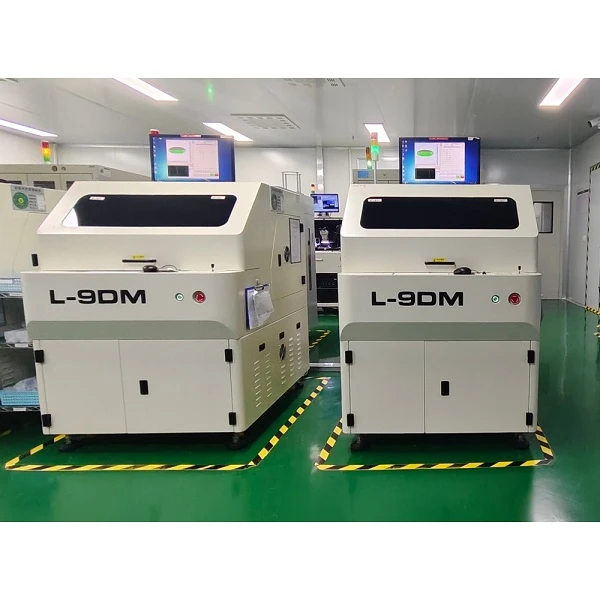
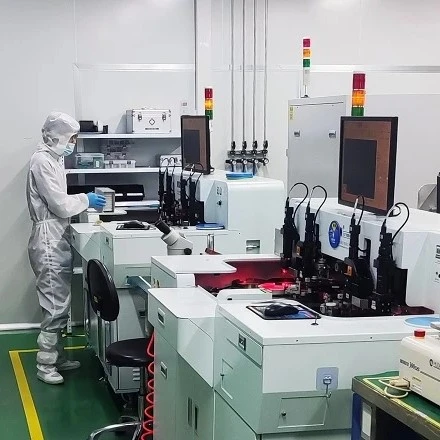
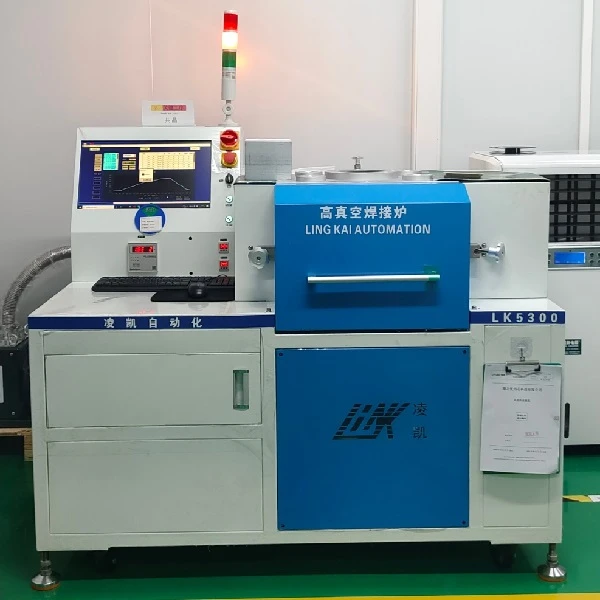
Examine the supplier's actual production facilities for epitaxy, DUV LED chip fabrication, LED packaging, and module assembly, including whether its manufacturing capacity can support repeat orders and larger production requirements; the documented manufacturing capacity of the referenced production operation reaches up to 2 million DUV LED chips per month.
Quality Management and Batch Consistency
Verify the manufacturer's quality management credentials, production traceability, and batch inspection practices, paying particular attention to IATF 16949 certification and AEC-Q102 qualification when sourcing components for automotive-related applications.
Assess R&D Strength and Engineering Validation Capabilities
Beyond manufacturing, buyers should determine whether a supplier has the R&D resources, simulation capabilities, and testing facilities needed to support UVC LED product development.
R&D Team & Technical Investment
Review the size and qualifications of the engineering team, research investment, and patent portfolio to assess whether the manufacturer can sustain independent technology development, supported by 10 PhD researchers, 17 master's-level engineers, R&D investment exceeding 20% of annual revenue, and 357 patent applications, with more than 50% granted.
RED-CFD Simulation: UV Product Design
Check whether the engineering team can use RED-CFD coupled simulation in UV product design, as this approach combines radiation energy distribution analysis with computational fluid dynamics to support the design and evaluation of UV systems.
In-House Laboratory & Testing Capabilities
Examine whether the manufacturer operates dedicated facilities for application and product validation, including a microbiology laboratory for microbial testing, an optical experimental platform for optical performance analysis, and a reliability laboratory for evaluating product reliability under different test conditions.
Verify Industrial Application and System Delivery Experience
Actual project experience provides another way to assess whether a supplier can extend its technical capabilities beyond individual chips and modules to complete UVC LED systems.
Look for Proven System-Level Experience
Review the supplier's completed UV system projects and manufacturing scope to determine whether it can support the development and assembly of integrated equipment rather than focusing exclusively on component or module supply.
Examine High-Flow Water Disinfection Projects
For industrial water treatment applications, examine documented system throughput and project experience, particularly the delivery of flow-through UVC LED disinfection equipment with capacities reaching 120 tonnes per hour (120 T/h) and applications covering biopharmaceutical and large-scale water treatment projects.
Evaluate the Commercial Value Beyond Unit Price
A broader supplier evaluation should consider how manufacturing resources, engineering support, and production capabilities affect procurement efficiency, product development, and long-term supply arrangements.
1. Supply Capacity for Repeat Orders
Assess whether the manufacturer's production capacity can accommodate initial orders, repeat purchases, and potential increases in demand, as established in-house production capabilities provide buyers with a clearer basis for evaluating long-term supply arrangements.
2. Technical Coordination Across Development Stages
Consider whether the supplier can coordinate chip fabrication, packaging, module development, and system engineering, since access to multiple stages within one manufacturing structure can reduce the number of separate technical interfaces buyers need to manage.
3. Engineering Support for Application Requirements
Evaluate whether the supplier can support technical discussions, product validation, and application-specific development, as access to R&D resources, simulation capabilities, and testing facilities can help buyers assess technical feasibility before committing to larger production orders.
UVC LED Supplier Comparison: Component Supplier vs. Full-Chain Manufacturer
The following comparison highlights the differences between suppliers focused on specific production stages and manufacturers with broader control over semiconductor development, manufacturing, and system engineering.
|
Evaluation Criteria |
Component-Focused Supplier |
Full-Chain Manufacturer |
|
R&D Scope |
Focuses on selected manufacturing stages |
Covers epitaxy, chip fabrication, packaging, and system development |
|
Product Performance |
Provides standard chip specifications |
Provides chip specifications supported by manufacturing expertise |
|
Manufacturing Quality |
Focuses on finished-component inspection |
Integrates quality control across multiple production stages |
|
Engineering Support |
Primarily supplies components or modules |
Supports R&D, simulation, and laboratory validation |
|
Project Experience |
Focuses on component or module supply |
Extends capabilities to complete UV LED system development and delivery |
|
Supply Capacity |
Depends on its own production scope and external supply arrangements |
Offers broader in-house manufacturing resources for evaluating production continuity |
|
Commercial Cooperation |
Primarily supports component procurement |
Can provide broader technical coordination from chip selection to system development |

35,000 m² | Owned Land | UV LED Chip R&D & Mass Production

5,000 m² | Epitaxial Material Growth & UV LED Chip Development
UVLEDTEK integrates AlN/AlGaN epitaxial development, DUV LED chip fabrication, packaging, module production, and UV system integration within its manufacturing and R&D structure. Its production resources, engineering team, RED-CFD simulation capabilities, dedicated laboratories, and industrial water disinfection projects provide buyers with a broader basis for evaluating technical support, supply capacity, and long-term commercial cooperation.
Conclusion
A meaningful UVC LED supplier comparison should go beyond unit prices and datasheets to examine chip performance, manufacturing control, R&D capabilities, engineering validation, and industrial project experience. These factors also shape the commercial value a supplier can offer through production continuity, technical coordination, and support throughout product development. Contact our team to discuss your UVC LED chip specifications, request product samples, and evaluate the technical and manufacturing support available for your application.
Request for a Suitable UVC LED Chip Supplier
FAQ
Q: What Documents Should Buyers Request Before Placing a Bulk UVC LED Chip Order?
A: Buyers should request detailed product datasheets, batch inspection records, relevant certification documents, reliability test reports, and manufacturing traceability information to verify product specifications and production quality.
Q: Can a UVC LED Chip Manufacturer Support Custom Product Development?
A: A technically capable manufacturer can support product development through chip selection, packaging configurations, module integration, engineering simulation, and application testing, depending on its actual R&D and manufacturing capabilities.
Q: How Can Buyers Evaluate UVC LED Chip Samples Before Bulk Purchasing?
A: Buyers should test sample wavelength, optical output, electrical characteristics, and performance under the intended operating conditions before confirming bulk production, while checking whether the measured results correspond to the manufacturer's datasheet.