High-Performance Optoelectronic & Sensor Modules
These functional modules integrate optical emitters, photodetectors, precision optics, and fluidic/environmental sensors into compact sub-assemblies. They convert physical, optical, or chemical signals into standardized electrical outputs for direct integration into host equipment. By consolidating discrete components onto a thermally managed PCB or sub-chassis, these modules eliminate optical alignment tolerances at the client assembly stage, suppress electromagnetic interference (EMI), and ensure consistent signal-to-noise ratios across production batches.
-
![Automotive Cabin Lighting and UVC Disinfection Integrated Module]() Automotive Cabin Lighting and UVC Disinfection Integrated...
Refrigerator Disinfection: Active Purification Cooling • Odor-Free • Extended Freshness • OEM Fit
Cabin Lighting&Disinfection: Unattended UVC Air Disinfection • 99.9% in 20 min •... -
![Automotive Refrigerator UVC Sterilization Module]() Automotive Refrigerator UVC Sterilization Module
Refrigerator Disinfection: Active Purification Cooling • Odor-Free • Extended Freshness • OEM Fit
Cabin Lighting&Disinfection: Unattended UVC Air Disinfection • 99.9% in 20 min •... -
![Static Water Module]() Static Water Module
Point-Source Germicidal Illumination
Direct Tank/Reservoir Mounting
Customizable Aperture Sizes & Connectors
Compact Circular Footprints
Tailored Driver & Harness... -
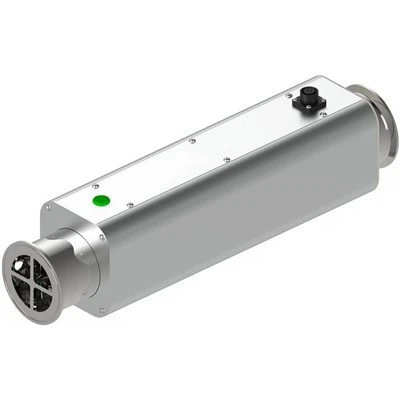
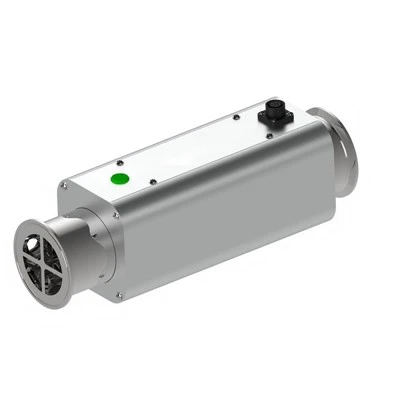
![Water Flow Module]() Water Flow Module
Zero Flow Restriction Design
Ultra-Compact Inline Form Factors
Freeze-Shock Resistant Buffer Structure
High Pressure & Temperature Tolerant
NSF/ANSI 55 Compliant (Class B... -
![UV Detector]() UV Detector
Broadband UV Detection (230–360 nm)
Real-Time Intensity Monitoring
Fast 5 ms Response Time
Simple Analog Voltage Output
Compact TO-Can Package (φ8.2 mm)
Ideal for UV... -
![Laser Foot-Sensing Switch]() Laser Foot-Sensing Switch
Touchless Laser Proximity Sensing
Fast Response & Reliable Gesture Detection
Ultra-Low Power Consumption (0.1–0.2 W)
Hygienic Hands-Free Activation
Compact, Easy-Integration... -
![UV Phototherapy Light Module]() UV Phototherapy Light Module
Medical-Grade Narrowband UVB (306–310 nm)
Precise Wavelength Stability for Therapeutic Consistency
Uniform Optical Field for Even Skin Exposure
Compact Footprints for Handheld &... -
![Disinfection Light Panel]() Disinfection Light Panel
Linear Form Factor for Space-Constrained Integration
Uniform Surface Illumination Pattern
Custom Length & Layout Configurations
Direct Embedding into Appliance Walls &... -
![Air and Surface Sterilization Module]() Air and Surface Sterilization Module
Plug-and-Play DC Drive Simplicity
Application-Specific Optical & Structural Design
Optimized for Maximum Cost-Performance
Compact Integration-Ready Footprints
Reliable 270–280...


Module Types & Key Specifications
|
Module Series |
Core Function |
Typical Output / Parameters |
Interface & Dimensions |
Operating Conditions |
|
LED Module |
Solid-state narrow-band/broadband illumination |
Wavelength: 365nm - 940nm; Radiant Flux: Up to 5W |
I2C / PWM control; Custom form factor (MCPCB) |
-20 °C to +70 °C; Max 85% RH |
|
Laser Module |
Precision collimated/structured beam generation |
Wavelength: 520nm / 635nm / 850nm; Output Power: 1mW - 200mW |
UART / TTL modulation; Diameter from Φ 8mm |
-10 °C to +50 °C; Active cooling for high power |
|
Detector Module |
Optical power or photon detection |
Spectral Response: 200nm - 1100nm; Rise time: <10ns |
Analog output / SPI digital; Standard SMD/connector |
-40 °C to +85 °C; Hermetically sealed option |
|
Water Flow / Static Module |
Fluid parameter monitoring & UV disinfection |
Flow Rate: 0.5 - 10L/min; Pressure: up to 0.8 MPa |
Pulse output / Modbus RTU; G1/4" or barb fittings |
5 °C to 50 °C water temp; IP67 rating |
|
Automotive Health Cabin Module |
Cabin occupant vital sign & environmental detection |
IR optical sensing / mmWave radar interface; Data refresh rate: 20Hz |
CAN bus / LIN / USB; Automotive-grade housing |
-40 °C to +85 °C; AEC-Q compliant components |
Applications & System Compatibility
Industrial Automation & Machine Vision
Laser and LED modules provide structured illumination and optical sensing for high-speed sorting, dimension inspection, and alignment systems.
Environmental & Water Treatment Systems
Static and flow water modules integrate disinfection UV sources and real-time turbidity/flow sensors into residential and commercial purification loops.
Automotive Cabins
Cabin health modules mount within the headliner or steering column to monitor driver alertness, heart rate variability, and cabin air quality parameters.
System Integration
Modules communicate via standard industrial protocols (CAN, Modbus, SPI, I2C). Mechanical mounting uses precision locating pins and threaded standoffs to maintain positional accuracy within ±0.05mm.
Production utilizes in-house SMT placement lines, die-bonders, active optical alignment (AOA) test benches, and cleanroom assembly zones. Manufacturing supports customized configurations to match specific host enclosure constraints:
Optical Sources: Custom center wavelengths, beam divergence angles, and multi-wavelength co-packaging.
Detectors & Sensors: Selection of photodiode material (Si, InGaAs, GaP) and spectral filters.
Control & Firmware: Tailored communication protocols, custom calibration tables, and onboard firmware updates.
Mechanical & Interface: Substrate material selection (Aluminium-based PCB, ceramic AlN, FR4), custom connector pinouts, and IP-rated sealing (up to IP68).

Testing, Quality Assurance & Reliability Verification
Manufacturing operates under strict quality management systems (ISO 9001:2015 certified, with automotive-grade production lines aligned to IATF 16949 requirements). Assembly zones maintain ISO Class 7 (Class 10,000) cleanroom standards with ANSI/ESD S20.20 electrostatic discharge control protocols.
Every production lot undergoes multi-stage verification prior to shipment:
Performance Testing: Sphere spectrometer testing for luminous flux/wavelength distribution; optical power meters for laser output stability.
Reliability Verification: Thermal cycling (-40 °C to +85 °C, 100 cycles), high-temperature high-humidity operational life testing (85 °C / 85% RH, 500 hours), and vibration testing conforming to industrial and automotive standards.
Traceability: Laser-etched serial numbers on PCBs link directly to raw material lot numbers, SMT reflow profiles, and final test data logs.
Frequently Asked Questions

Request a Quote
Submit technical specifications, target volumes, and target application parameters to initiate an engineering review.
Required Information for RFQ: Target operating wavelength/range, electrical interface protocol, environmental exposure limits (temperature, moisture, vibration), and estimated annual volume.
Response Time: Technical and commercial proposals are issued within 24 to 48 hours following specification verification.
UVLEDTEK supplies a full lineup of customized UV LED modules covering automotive cabin disinfection, static & flow-through water sterilization, air & surface sanitization, medical UVB phototherapy, linear disinfection panels, UV intensity detectors and laser touchless sensors. All compact DC-driven modules support full OEM structural & electrical customization for water purifiers, home appliances, new energy vehicles and dermatology medical devices. As a reliable Chinese module manufacturer, we deliver high-performance products at factory competitive prices with one-stop customization service.