Introduction
UVC LED packaging plays a critical role in determining how effectively a semiconductor light source performs in water treatment, air purification, and surface disinfection equipment. Although the chip generates ultraviolet radiation, the package influences optical output, heat transfer, environmental protection, and the reliability of the finished device. For a closer look at the manufacturing stages that transform a bare semiconductor chip into a finished LED device, see our guide: How Are UVC LEDs Packaged? From Bare Chip to Packaged LED. Understanding these relationships helps engineers, technical buyers, and distributors evaluate packaged UVC LEDs beyond their headline power ratings and select components that match real operating requirements.
UVC LED Package Structures & Material Choices
Different packaging structures address different integration requirements, so buyers should evaluate the materials, optical interfaces, and thermal paths rather than relying on package names alone.
In UV LED packaging, the UVC LED package structure and the choice of UVC LED packaging materials directly influence optical transmission, thermal performance, and long-term environmental resistance.
Organic, Semi-Inorganic & COB Packaging
The three packaging categories below represent distinct industrial approaches, but their suitability depends on the actual construction and validated performance of each device.
1. Organic Packaging
Organic materials can provide useful optical or protective functions, but engineers should verify their resistance to sustained UVC exposure because material degradation may affect transmission, appearance, and long-term output.
2. Semi-Inorganic Packaging
Semi-inorganic structures warrant evaluation of their individual material interfaces, sealing methods, and optical-window stability rather than assumptions about their cost or performance advantages.
3. COB Packaging
Chip-on-board (COB) configurations integrate multiple chips on a shared substrate, making thermal distribution, electrical interconnection, optical uniformity, and module-level integration important design considerations.
What Matters More Than the Package Label
The package classification alone does not establish a device's heat resistance, moisture protection, or service life, so buyers should request construction details and performance data for the specific model.
How UVC LED Packaging Affects Optical Output
Packaging influences how ultraviolet energy exits the device and reaches the target, but the resulting irradiance also depends on installation distance, optical geometry, and the surrounding environment.
Understanding 30°, 60° & 120° Radiation Angles
The available radiation angles provide different light-distribution options, although the best choice depends on the required coverage and the design of the complete disinfection system.
30° Radiation Angle
A narrower beam can concentrate optical output into a smaller angular region, which may benefit directional optical designs when the source-to-target distance and beam geometry are properly controlled.
60° Radiation Angle
An intermediate beam angle offers another distribution option for balancing coverage and localized irradiance, subject to the emitter's measured output and installation geometry.
120° Radiation Angle
A wider beam can illuminate a broader area, but it does not automatically deliver higher irradiance at every point or guarantee a more effective disinfection result.
Match the Package to the Optical Target
UVLEDTEK includes packaged UVC LEDs with 30°, 60°, and 120° radiation angles, alongside 3.5 × 3.5 mm and 6.5 × 6.5 mm package formats.
Engineers can compare these options, then validate irradiance distribution at the intended working distance and confirm that the delivered UVC dose meets application requirements.

Thermal Management: Comparing 3535 & 6565 Packages
Thermal management is essential because a UVC LED converts only part of its electrical input into emitted ultraviolet energy, leaving heat that must travel through the package and the surrounding assembly.
Package Size and Power Are Related but Not Interchangeable
Package dimensions provide an initial indication of integration requirements, but engineers must compare the actual electrical and thermal specifications before selecting a device.
3535 Package (3.5 × 3.5 mm)
The compact footprint can simplify integration into space-constrained equipment, but the permitted drive conditions and external heat-dissipation design must support the selected model's continuous operating requirements.
6565 Package (6.5 × 6.5 mm)
The LM2IQUB model is specified with a 6.5 × 6.5 mm footprint, a 600 mA forward current, and an optical-power range of 650–1000 mW, illustrating the higher-output options available in this package size.
Evaluate the Complete Thermal Path
A larger package does not independently guarantee lower junction temperature, because heat dissipation depends on the entire thermal path from the chip through the package, solder interface, PCB, and external cooling structure.
Thermal Resistance
Request the applicable thermal-resistance data and measurement reference points so that engineers can estimate junction temperature under the intended operating conditions.
Substrate & Interface Materials
Review the actual substrate construction, attachment method, and thermal-interface materials rather than assuming that a particular ceramic or bonding material is used.
System-Level Cooling
Validate PCB layout, heat-sink capacity, drive current, and ambient temperature under representative operating conditions to reduce the risk of excessive junction temperature and output degradation.
Materials such as aluminum nitride (AlN) and aluminum gallium nitride (AlGaN) are relevant to deep-ultraviolet semiconductor technology, but they serve different material roles. UVLEDTEK provides additional semiconductor-material context; its information should not be treated as proof that a particular packaged LED uses an AlN package substrate.
Environmental Protection, Sealing & Package Lifetime
UVC LED packages must maintain their optical, electrical, and mechanical functions under the environmental conditions expected in the final application, particularly when sustained radiation and moisture exposure are involved.
Material Degradation & Moisture Protection
- UVC Resistance: Some organic materials may degrade under prolonged ultraviolet exposure, so engineers should assess optical-window transmission, discoloration, and material stability over the intended operating period.
- Moisture Protection: Moisture ingress can contribute to corrosion, electrical instability, and interface degradation, making the package's sealing structure and environmental resistance important for water-treatment and humid-air applications.
- Hermeticity Requirements: Buyers should distinguish ordinary moisture protection from verified hermetic sealing and request appropriate test evidence before specifying a hermetically sealed package.
Evaluate Lifetime With Evidence
L70 is the time required for optical output to decline to 70% of its initial value under defined conditions, but a published lifetime figure alone cannot establish performance in every application.
- Operating Conditions: Check the drive current, temperature, operating cycle, and test environment associated with the stated lifetime.
- Aging Data: Request optical-output retention curves and supporting reliability records to understand how the device behaves over time.
- Qualification Evidence: For automotive or other demanding applications, verify whether relevant qualification requirements, including AEC-Q102 where applicable, cover the specific device and intended use.
How to Evaluate a UVC LED Packaging Supplier
A reliable supplier evaluation should connect published specifications with manufacturing controls and test evidence, allowing procurement teams to compare devices under equivalent conditions.
Specification Traceability
Confirm the model number, package dimensions, peak wavelength, optical power, forward current, and radiation angle, including the conditions under which each parameter was measured.
Thermal & Optical Verification
Request applicable thermal-resistance data, junction-temperature limits, and optical test results to determine whether the component can maintain its required performance in the intended assembly.
Reliability Validation
Review aging results, temperature and humidity testing, and other relevant reliability records, checking that the documented conditions reflect the target application's operating environment.
Manufacturing & Quality Control
Assess whether the supplier has controlled packaging processes, optical verification equipment, reliability-testing facilities, and traceability procedures that support consistent production batches.
Customization & Scale-Up Support
Confirm whether the supplier can accommodate the required package configuration and provide comparable engineering-sample and mass-production specifications without compromising agreed performance requirements.
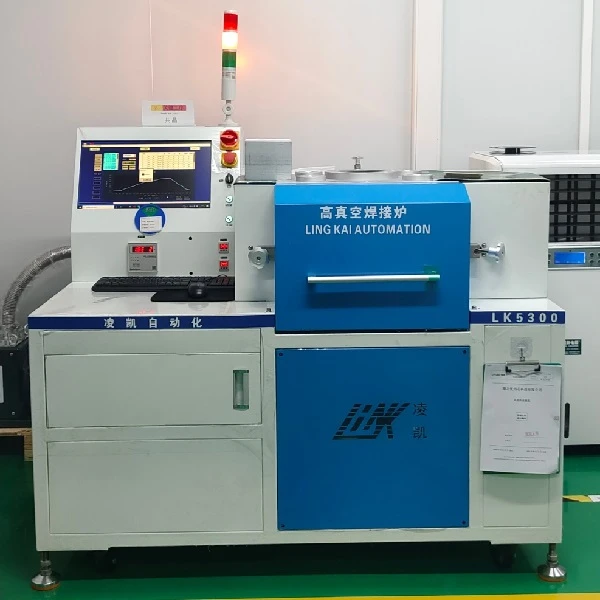
UVLEDTEK offers in-house LED packaging, module and system assembly, optical testing, and reliability-testing capabilities. These facilities provide relevant evidence of its technical scope, while model-specific specifications and test records remain necessary to verify the performance of the device being purchased.
LED Packaging Line
End-to-End Manufacturing from Chip to System


Conclusion
UVC LED packaging influences how effectively a device delivers ultraviolet energy, manages heat, withstands environmental stress, and maintains optical output over time. Engineers and buyers should therefore evaluate package structure, radiation angle, thermal performance, material durability, and documented reliability together rather than selecting components by optical power alone. Explore the packaged UVC LED products and submit your target wavelength, optical power, radiation angle, operating conditions, and integration requirements to identify a suitable solution for your application.
Get Your UVC LED Packaging Solution Now