Introduction
Air conditioners circulate indoor air through filters, evaporator coils, and internal air passages, where moisture and accumulated contaminants can create conditions for microbial growth. Integrating a UVC LED module offers an additional approach to controlling microbial contamination, but its effectiveness depends on how the module is positioned, operated, and protected within the appliance. Manufacturers must evaluate installation requirements, irradiation conditions, user safety, module specifications, and supplier capabilities before incorporating UVC technology into an air conditioner design.
Explore Our Air Conditioner Solutions
UVC LED Module Integration in Air Conditioners
Integrating a UVC LED module requires coordination between the intended treatment target, the air conditioner's internal layout, and its operating conditions.

Choosing the Right Installation Position
The module may be installed in the return-air passage, downstream of the filter, or near the evaporator, depending on whether the design targets airborne microorganisms or internal surfaces. Manufacturers should check for obstructions such as filters, fan housings, and structural ribs that could block UVC radiation while ensuring the mounting position does not interfere with airflow or other components.
Matching UVC Dose with Airflow Conditions
The delivered UVC dose depends on target irradiance and exposure time, so airflow velocity, duct cross-section, irradiation distance, and LED arrangement all influence treatment performance. Engineers should evaluate the irradiation field under representative airflow conditions to identify insufficiently exposed areas rather than relying on the module's radiant flux rating alone.
Managing Thermal and Electrical Requirements
Both MD001 and UVC009 use DC12V constant-voltage drive, but their power ratings differ, requiring manufacturers to check driver compatibility, power capacity, wiring, and electrical protection. The installation must also provide adequate heat dissipation, with operating temperature and thermal stability evaluated under actual appliance conditions.
Planning Mechanical Installation and Maintenance
The mechanical design should accommodate mounting dimensions, fixing points, connectors, cable routing, vibration, and access for inspection or replacement. Manufacturers should also account for condensation and dust exposure, ensuring that the complete installation footprint includes protective structures, wiring clearance, and maintenance space.
UVC LED Safety in Air Conditioner Design
Air conditioner manufacturers must address two distinct safety concerns: preventing unintended UVC exposure to users and limiting long-term damage to internal appliance materials.
Preventing Accidental UVC Exposure
The module should operate inside an enclosed area with light-blocking structures to prevent direct or reflected UVC radiation from reaching users. Manufacturers can incorporate access-panel interlocks or other control strategies, but these must be validated at the appliance level, with leakage checks covering air outlets, panel seams, and service openings.
Preventing UV-Related Material Degradation
Repeated UVC exposure can age plastics, rubber seals, filter materials, and coatings, potentially causing discoloration, brittleness, or reduced mechanical performance. Manufacturers should use UVC-resistant materials or shielding in vulnerable areas and test compatibility against the intended wavelength, exposure intensity, operating schedule, and cumulative dose.
How to Select the Right UVC LED Module for an Air Conditioner
Module selection should begin with the air conditioner's physical and electrical requirements, followed by an assessment of whether the proposed configuration can achieve the intended irradiation performance.
Comparing MD001 and UVC009
MD001 and UVC009 are both listed as air-conditioning UVC sterilization modules, but their physical dimensions, radiant flux, and power ratings differ.
|
Specification |
MD001 |
UVC009 |
|
Dimensions |
52 × 27 × 8 mm |
87 × 29 × 32 mm |
|
Radiant Flux |
15–30 mW |
≥6 mW |
|
Wavelength |
270–280 nm |
270–280 nm |
|
Driving Method |
Constant Voltage, DC12V |
Constant Voltage, DC12V |
|
Rated Power |
≤0.72 W |
≤0.5 W |
MD001 has a smaller footprint and a higher stated radiant-flux range, while UVC009 has a lower maximum power rating and a different physical form. However, radiant flux measures total emitted optical power, not the irradiance received by a specific surface or the dose delivered to moving air, so these figures alone cannot establish which module provides better disinfection performance.
Matching Module Specifications with Air Conditioner Requirements
Manufacturers should match module dimensions, optical characteristics, input voltage, and power consumption with the available installation space and electrical architecture. If neither standard configuration meets the requirements, the supplier can assess changes to module dimensions, optical arrangement, mounting structure, or electrical design.
What to Look for in a UVC LED Module Design and ODM Partner
A suitable supplier should support both the technical evaluation of the module and the manufacturing controls needed to maintain consistent product performance.
Verifying Optical and Germicidal Performance
The supplier should provide wavelength, radiant flux, irradiance distribution, and measurement conditions for technical evaluation. Manufacturers should then verify optical coverage and germicidal performance in a representative air conditioner configuration, defining the target microorganisms, airflow, exposure time, and test method rather than relying on results from unrelated laboratory setups.
Testing Thermal and Operational Reliability
Reliability testing should cover operating temperature, humidity, continuous operation, repeated switching, electrical insulation, and changes in radiant flux over time. The supplier should provide test conditions, sample configurations, acceptance criteria, and the limitations behind any service-life claim.
Evaluating Manufacturing and ODM Capabilities
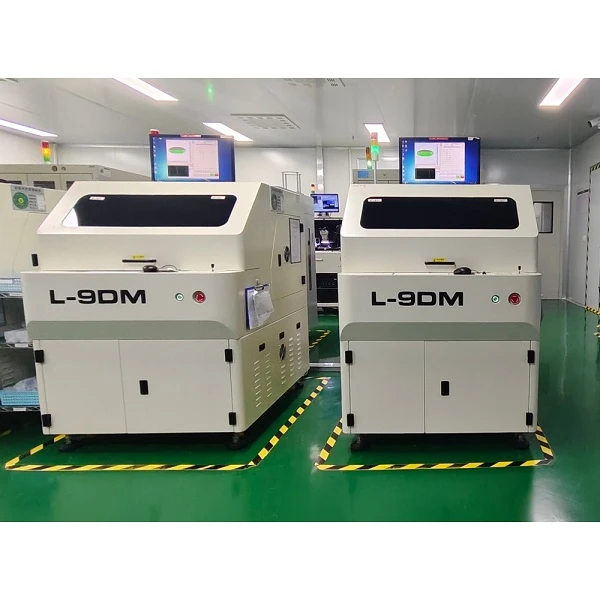
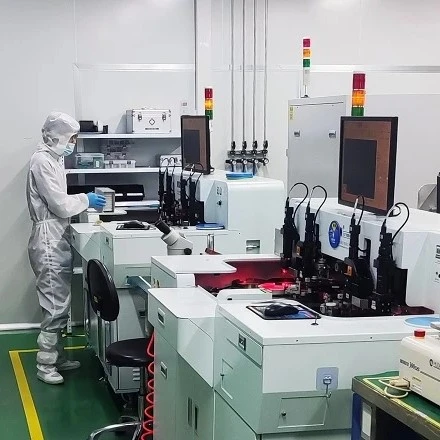
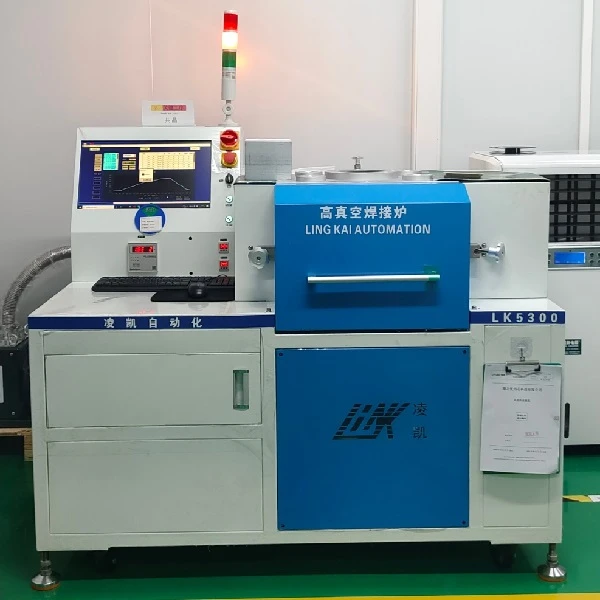
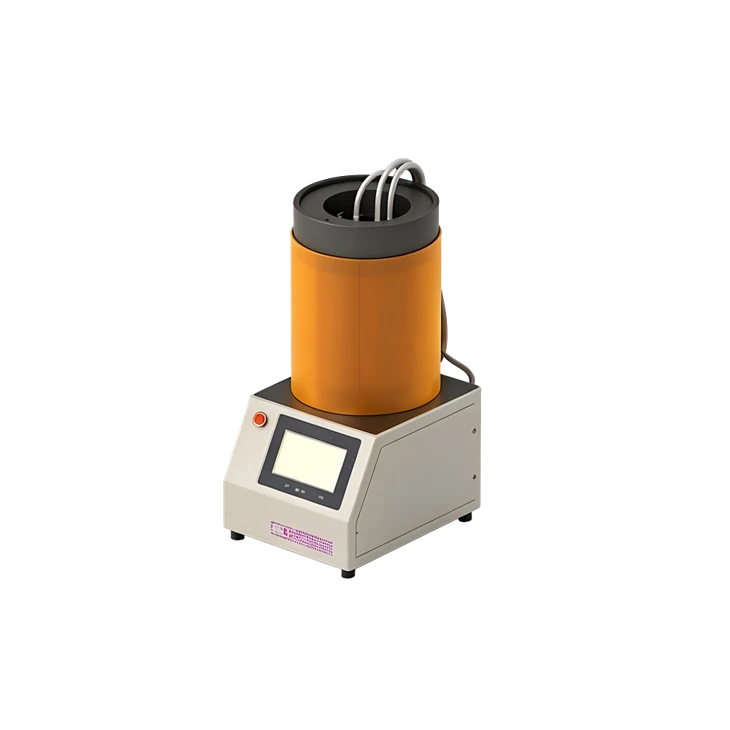
An ODM partner should support development from LED chip and packaging selection to optical configuration, module structure, electrical integration, prototyping, and volume production. Manufacturers should also check production controls, component traceability, batch consistency, incoming inspection, and applicable product-specific compliance documentation.
UVLEDTEK supplies UVC LED modules for air-conditioning applications, including MD001 and UVC009, and supports module selection and customized optical or structural configurations. Its development and production support allows air conditioner manufacturers to evaluate standard modules or discuss project-specific requirements.

35,000 m² | Owned Land | UVC LED Module-Level Development & Assembly
Conclusion
Integrating a UVC LED module into an air conditioner requires coordinated decisions about installation position, irradiation conditions, electrical and thermal design, and user safety. MD001 and UVC009 offer different starting configurations, but their suitability must be established through application-specific evaluation rather than specification comparison alone. Contact us with your air conditioner layout, installation space, target irradiation area, and electrical requirements to evaluate a suitable configuration for your next product design.
Request for Air Conditioner UVC LED Solutions
FAQ
Q: Can UVC LED Modules Be Retrofitted into Existing Air Conditioner Designs?
A: Yes, but a retrofit requires sufficient mounting space, a compatible power supply, suitable wiring, controlled UVC exposure, and verification that the existing appliance structure allows effective irradiation of the intended target.
Q: Does an Air Conditioner UVC LED Module Produce Ozone?
A: UVC LEDs operating in the 270–280 nm range are generally not associated with ozone generation, which typically requires shorter-wavelength ultraviolet radiation. However, manufacturers should verify the module's actual emission spectrum rather than relying on a nominal wavelength specification alone.
Q: How Can Manufacturers Determine Whether MD001 or UVC009 Is Suitable for Their Air Conditioner?
A: Manufacturers should compare the modules' dimensions, radiant flux, power requirements, and optical characteristics against the available installation space and intended treatment conditions, then confirm the selection through testing in the actual air conditioner structure.