Introduction
UVC LED technology uses semiconductor light-emitting diodes, typically based on AlGaN materials, to generate ultraviolet-C radiation. In disinfection systems, UVC photons damage microbial DNA or RNA and prevent microorganisms from replicating. Compared with conventional mercury UV lamps, UVC LEDs offer compact size, instant switching, mercury-free operation, and selectable peak wavelengths. Actual system performance depends on UV dose, optical design, thermal management, and application conditions.
What Is a UVC LED
A UVC LED is a semiconductor light source that emits ultraviolet-C radiation, typically within the 200–280 nm range. Its compact design, mercury-free operation, and electronic controllability make it suitable for a wide range of disinfection and industrial applications.
Understanding the UVC Wavelength Range
Ultraviolet light is generally divided into three bands according to wavelength, each serving different industrial purposes. While UVA and UVB are commonly used for curing, sensing, and analytical applications, UVC provides the germicidal wavelengths required for microbial inactivation. Most commercial UVC LED products are designed within the 255–280 nm range, where system performance can be optimized according to application requirements.
|
UV Band |
Approximate Range |
Typical Uses |
|
UVA |
315–400 nm |
Curing, inspection, sensing |
|
UVB |
280–315 nm |
Phototherapy, horticulture, analysis |
|
UVC |
255–280 nm |
Microbial inactivation, disinfection, selected photochemical applications |
UVC LED Chip, Packaged LED, Module & System
UVC LED products are available in several integration levels, each serving a different role in product development.
- UVC LED Chip: Bare semiconductor die that generates ultraviolet-C radiation.
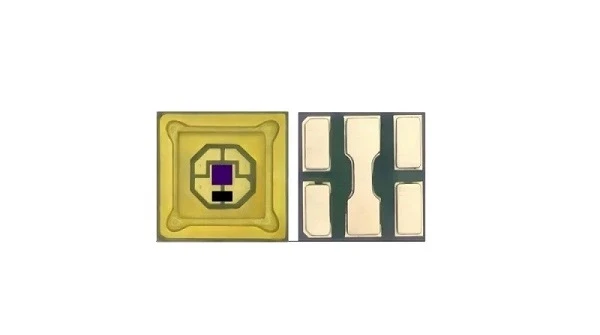
- Packaged UVC LED: Packaged device with electrical contacts, encapsulation, and an optical emitting surface.
- UVC LED Module: Assembly integrating packaged LEDs, PCB, driver circuitry, thermal management, and optical components.
- UVC LED System: Complete disinfection equipment incorporating modules, reactor chamber, control electronics, sensing, and safety functions.
Understanding these integration levels helps UVC LED manufacturers select the appropriate solution, from individual semiconductor components to fully integrated UVC disinfection systems.
How Does a UVC LED Work
Unlike conventional UV lamps, UVC LEDs generate ultraviolet light without mercury and support equipment designed to meet evolving environmental requirements. Their performance depends not only on chip technology but also on optical design, thermal management, and the UV dose delivered by the complete system.
How a Semiconductor Generates UVC Light
UVC LEDs are fabricated from AlGaN (Aluminum Gallium Nitride) semiconductor materials grown through epitaxial processes. When forward current is applied, electrons and holes recombine within the active region, emitting UVC photons. The resulting wavelength is determined by the semiconductor material composition, while package design, optics, thermal management, and drive electronics work together to maintain stable optical output and long-term reliability.
How UVC Light Inactivates Microorganisms
When microorganisms receive a sufficient UV dose, their DNA or RNA absorbs UVC energy, disrupting the molecular structure required for replication. As a result, bacteria, viruses, and other microorganisms can no longer reproduce, making UVC LED technology widely used in water treatment, air purification, surface disinfection, and laboratory equipment where chemical-free microbial control is required.
Why UV Dose Matters
UV dose is one of the most important parameters in UVC disinfection and is commonly expressed as:
UV Dose = Irradiance × Exposure Time
Although the equation is straightforward, the actual UV dose depends on application-specific conditions. Factors such as flow rate, UV transmittance (UVT), reactor geometry, airflow distribution, irradiation distance, and shadowing all influence the dose received by microorganisms, making complete system design more important than wavelength or optical power alone.
What Wavelengths Do UVC LEDs Use
UVC LEDs are available in different peak wavelengths to support various disinfection applications. Selecting the appropriate wavelength requires balancing germicidal performance with optical design, operating conditions, and overall system requirements.
Common UVC LED Wavelengths
Commercial UVC LEDs are available within the 255–280 nm range. Although the wavelength difference may appear small, each range offers different engineering characteristics and application priorities.
255–265 nm – Commonly selected for applications requiring high germicidal effectiveness.
265–275 nm – Provides a balanced option for many water, air, and surface disinfection systems.
275–280 nm – Often chosen based on application requirements, optical efficiency, package availability, and overall system design.
In practical engineering, wavelength selection should also consider factors such as target microorganisms, required UV dose, thermal management, expected lifetime, and the operating environment rather than relying on wavelength alone.
Is 265 nm or 275 nm Better?
Both 265 nm and 275 nm UVC LEDs are widely used, but the optimal choice depends on the application rather than a single specification. Manufacturers should evaluate wavelength together with the target microorganisms, required UV dose, optical design, thermal conditions, and overall system integration to achieve the desired disinfection performance under real operating conditions.
Benefits and Limitations of UVC LED Technology
UVC LEDs provide significant advantages in system integration, electronic control, and application flexibility. Their overall performance, however, is achieved through optimized optical, thermal, electrical, and mechanical engineering.
Key Benefits of UVC LEDs
Mercury-Free Light Source
Mercury-free semiconductor light source suitable for environmentally responsible product design, making them suitable for equipment designed to meet evolving environmental and sustainability requirements.
Instant ON/OFF Control
Unlike light sources that require warm-up time, UVC LEDs reach full output immediately after activation, allowing precise switching and demand-based operation.
Compact System Integration
Compact package supports integration into space-constrained equipments such as water purifiers, air purification systems, medical devices, and smart appliances.
Flexible Wavelength & Optical Design
Available peak wavelengths and directional light output provide greater flexibility for optical design, reactor optimization, and application-specific system integration.
Intelligent Electronic Control
UVC LEDs integrate with electronic drivers, sensors, and intelligent control systems, supporting automated operation and connected equipment.
Long Service Life
When operated within appropriate electrical and thermal conditions, UVC LEDs provide stable optical output over extended operating periods. Long-term performance is commonly evaluated using L70 lifetime testing.
Engineering Considerations for UVC LED Systems
The performance of a UVC LED system depends on the complete engineering design rather than the light source alone. Effective thermal management, electrical control, and application-specific factors such as water quality, UV transmittance (UVT), reactor geometry, airflow distribution, irradiation distance, and surface characteristics all influence the delivered UV dose and overall system performance.
Key Performance Parameters of a UVC LED
Evaluating a UVC LED requires more than comparing optical power alone. Multiple performance parameters work together to determine system efficiency, reliability, and disinfection effectiveness.
|
Performance Parameter |
What It Means |
Why It Matters |
|
Peak Wavelength |
Center Wavelength of UVC Emission |
Determines Application Suitability |
|
Optical Power |
Total UVC Light Output |
Influences Available UV Energy |
|
Wall-Plug Efficiency (WPE) |
Ratio of Optical Output to Electrical Input |
Reflects Energy Conversion Efficiency |
|
Irradiance |
UV Intensity at a Specified Distance |
Determines Delivered UV Dose |
|
UV Dose |
Irradiance × Exposure Time |
Directly Affects Disinfection Performance |
|
Viewing Angle |
Angular Distribution of Emitted Light |
Influences Optical and Reactor Design |
|
Forward Current |
Operating Drive Current |
Affects Optical Output and Electrical Performance |
|
Junction Temperature |
LED Chip Operating Temperature |
Impacts Reliability, Output Stability, and Lifetime |
|
L70 Lifetime |
Operating Time Until Output Declines to 70% |
Indicates Long-term Maintenance Expectations |
|
Thermal Resistance |
Ability to Transfer Heat Away from the Junction |
Supports Effective Thermal Management |
No single specification defines overall UVC LED performance. Manufacturers should evaluate optical, electrical, thermal, and application-related parameters together to select the most suitable solution and achieve reliable system performance. If you want to learn more about UVC LED performance parameters, please talk to our expert.
Where Is UVC LED Technology Used
UVC LED technology is now used across a growing range of disinfection and industrial applications. Each application places different requirements on wavelength selection, UV dose, optical design, and system integration.
Major Functions of UVC LED Technology
Water Disinfection
UVC LEDs are used to control microorganisms in drinking water, process water, stored water, and flowing water. Typical systems include point-of-use purifiers, static water modules, flow-through reactors, and industrial water treatment equipment.
Air Disinfection
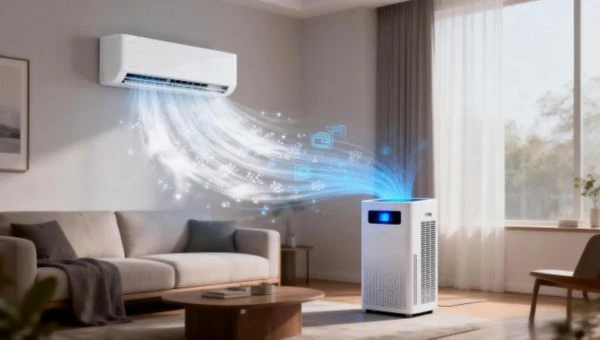
UVC LEDs can be integrated into air purifiers, HVAC equipment, ventilation ducts, and enclosed air-treatment chambers. System performance depends on airflow rate, exposure time, optical coverage, and the UV dose delivered to airborne microorganisms.
Surface Disinfection
UVC LED systems are used to treat exposed or enclosed surfaces in appliances, healthcare equipment, laboratory instruments, food-processing equipment, and other controlled environments. Optical layout and shadowing must be carefully managed to achieve adequate surface coverage.
UVC LED Solutions for Key Applications

Water Treatment
Smart Home Appliances

Vehicle Cabins

Biopharmaceutical
Key Engineering Considerations by Each Application
|
Application |
Important Conditions |
|
Water Treatment |
UVT, Flow Rate, Reactor Design, Irradiation Uniformity |
|
Smart Home Appliances |
Installation Space, Thermal Management, Operating Cycle |
|
New Energy Vehicles |
Temperature, Vibration, HVAC Airflow, Automotive Reliability Requirements |
|
Biopharmaceutical |
Wavelength Selection, Optical Uniformity, Temperature Control, Process Validation |
UVC LEDs vs Mercury UV Lamps
UVC LEDs and mercury UV lamps both generate germicidal UVC radiation but differ in design, operation, and integration. The most suitable technology depends on application requirements and overall system objectives.
|
Factor |
UVC LED |
Mercury UV Lamp |
|
Mercury |
Mercury-free |
Contains Mercury |
|
Start-Up |
Instant ON/OFF |
Requiring Warm-up |
|
Switching |
Frequent Switching Supported |
Better Suited to Continuous Operation |
|
Size |
Compact & Modular |
Generally Larger |
|
Wavelength |
Selectable Peak Wavelengths |
Fixed by Lamp Type |
|
Light Output |
Directional Emission |
Broad Omnidirectional Emission |
|
Thermal Design |
Junction Heat Management Requiring |
Lamp & Ballast Heat Generation |
|
Lifetime |
Depends on Drive & Thermal Conditions |
Depends on Lamp Type & Operating Cycle |
|
System Cost |
Application-dependent |
Application-dependent |
Both technologies continue to serve different applications. Selecting between UVC LEDs and mercury UV lamps depends on system objectives, operating conditions, integration requirements, and long-term product development goals.
UVC LED Safety and Integration Considerations
Reliable UVC LED products require safe integration as well as effective optical, thermal, electrical, and mechanical design. These considerations help ensure consistent performance throughout the product lifecycle.
UVC Radiation Safety
Because UVC radiation can affect the skin and eyes, UVC LEDs should be integrated into systems that prevent direct human exposure during operation. Enclosed structures, shielding, interlock mechanisms, and automatic shut-off functions are commonly used to help ensure safe operation while delivering UVC energy only to the intended treatment area.
Optical & Mechanical Integration
Optical layout and mechanical design directly influence UV utilization and system reliability. Factors such as LED arrangement, viewing angle, installation space, reflector design, housing structure, and sealing should be optimized together to achieve uniform irradiation and stable long-term performance.
Thermal & Electrical Design
Stable UVC LED performance depends on effective thermal and electrical design. Proper heat dissipation, constant-current driving, and protection circuits help maintain optical output, improve reliability, and support consistent operation under different working conditions.
System Validation & Compliance
Complete UVC LED systems should be validated under actual operating conditions through optical, thermal, microbiological, and reliability testing. For regulated applications, selecting components that meet relevant quality and environmental standards can also support product qualification and market deployment.
From UVC LED Chip to a Production-Ready System
Developing a production-ready UVC LED solution requires expertise beyond the LED itself. Integrated engineering, manufacturing, and validation capabilities help shorten development cycles and improve system performance.
A Complete Technology Platform
An integrated technology platform helps coordinate performance from chip development to the final application. Capabilities spanning epitaxial growth, chip fabrication, LED packaging, module development, and system integration enable better customization, product consistency, and development efficiency.


Engineering & ODM Support
Different applications require different optical, thermal, electrical, and mechanical designs. Suppliers with multidisciplinary engineering and ODM capabilities can develop customized UVC LED solutions that better match specific performance, size, and integration requirements.



Manufacturing & Quality Assurance
Reliable manufacturing combines standardized production with comprehensive quality verification. Optical testing, reliability evaluation, and application validation help ensure consistent product performance across large-volume production and real operating conditions.
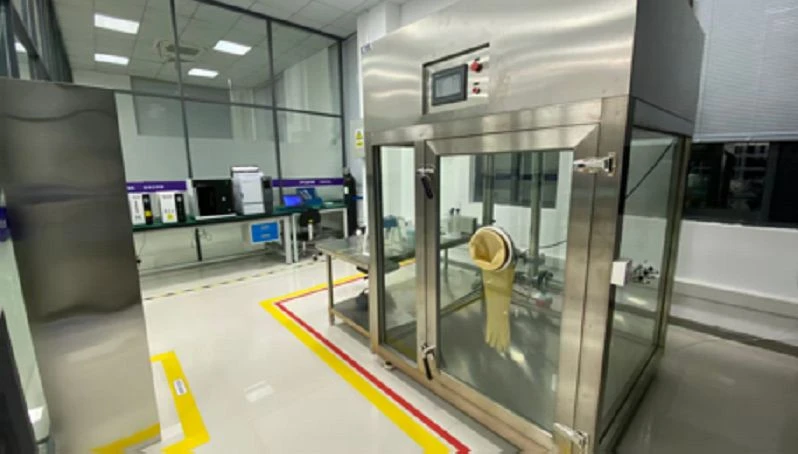

An integrated UVC LED supplier with expertise in chip technology, engineering, manufacturing, and validation supports efficient product development while supporting consistent quality, efficient customization, and scalable production across different UVC LED applications.
Frequently Asked Questions About UVC LEDs
Q: What is the difference between a UVC LED and a UV lamp?
A: A UVC LED is a semiconductor light source, while a conventional UV lamp typically generates UVC radiation through gas discharge. UVC LEDs are compact, mercury-free, support instant on/off operation, and offer selectable peak wavelengths.
Q: What wavelength is best for UVC LED disinfection?
A: There is no single wavelength that is best for every application. Commercial UVC LEDs are commonly available between 255 and 280 nm, and the optimal choice depends on factors such as the target microorganisms, required UV dose, optical design, and operating environment.
Q: How long do UVC LEDs last?
A: UVC LED lifetime depends on operating current, junction temperature, thermal management, and system design. Manufacturers typically use L70 lifetime to evaluate long-term optical performance.
Q: Are UVC LEDs suitable for water treatment?
A: Yes. UVC LEDs are widely used in residential, commercial, and industrial water treatment systems, with performance depending on proper UV dose, reactor design, and flow conditions.
Q: Are UVC LEDs safe to use?
A: Yes, when integrated with appropriate engineering controls. Enclosed designs, shielding, interlocks, and automatic controls help prevent direct exposure to UVC radiation during operation.
Q: How do I choose the right UVC LED supplier?
A: Look beyond LED specifications. Evaluate suppliers based on chip technology, engineering capabilities, manufacturing consistency, quality validation, and ODM support for your application.
Looking for a UVC LED Manufacturer and Technology Partner?
Developing a reliable UVC LED product requires more than selecting a wavelength and optical power. LED packaging, optical design, thermal management, drive conditions, material compatibility, operating environment, and system geometry must all be considered together.
As a full-chain UVC LED manufacturer, UVLEDTEK focuses on UVC LED production and system-level application integration. Whether you are sourcing packaged UVC LEDs, developing a customized module, or integrating UVC technology into a new product, our team can help evaluate the technical requirements and recommend an appropriate solution.
Share your application, target wavelength, performance requirements, installation conditions, and project stage with us to start the discussion.