Introduction
In UV LED product development, selecting chips or modules that meet specified optical and electrical parameters does not guarantee that the finished equipment will perform as expected. Once integrated into a complete device, thermal accumulation, optical distribution, material compatibility, and electrical interactions can affect output stability, disinfection efficiency, and service life. UV LED system validation addresses these risks by evaluating how individual components work together under actual operating conditions before a product enters mass production.
UV LED Product Development Services
4 Engineering Areas That Require System-Level Validation
System-level validation should cover four interconnected engineering areas because weaknesses in any one of them can compromise the performance and reliability of the entire UV LED product.
1. Thermal Management & Junction Temperature Control
UV LED thermal testing must evaluate heat accumulation across the complete system rather than relying solely on the temperature performance of individual LEDs under ideal cooling conditions. Multiple LED arrays, PCB thermal resistance, heat sinks, and thermal interface materials (TIMs) collectively affect junction temperature, which can influence optical output, wavelength stability, and long-term reliability. Testing should therefore examine temperature distribution under full-load steady-state operation, different ambient temperatures, and the thermal protection response of the driver.
2. Optical Distribution & Effective UV Dose
UV LED performance testing must establish whether the system delivers sufficient and uniform UV exposure across the actual treatment area rather than simply meeting a specified optical power or irradiance value at one measurement point. In water disinfection equipment, flow rate, UV transmittance (UVT), reactor geometry, and water distribution influence the effective UV dose, while surface disinfection and curing systems require evaluation of working distance, irradiation angle, and beam overlap. Three-dimensional irradiance mapping and application-specific dose validation help identify insufficient exposure areas and determine whether the system can achieve its intended performance.
3. Material Compatibility & Electrical Stability
UV LED product testing must account for the effects of short-wavelength UV radiation on materials surrounding the light source, particularly polymers, adhesives, seals, and reflective components that may experience yellowing, degradation, or reduced optical performance. Material compatibility assessments should reproduce relevant wavelengths and exposure conditions to evaluate changes in appearance, transmission, sealing performance, and potential volatile contamination. Electrical testing should also verify the compatibility of LED chips, constant-current drivers, PCBs, and protection circuits, with particular attention to startup current overshoot, operating voltage, and abnormal-condition protection.
4. Environmental Stress & Long-Term Reliability
UV LED reliability testing must reflect the environmental conditions expected during actual product operation because continuous illumination under controlled laboratory temperatures cannot reveal every potential failure mechanism. Depending on the application, testing may include high- and low-temperature exposure, humidity, temperature cycling, thermal shock, vibration, salt spray, and waterproof assessments. Comparing optical output, wavelength, and electrical parameters before and after these tests helps identify degradation trends and provides data for accelerated life assessment and service-life estimation.
Component-Level Testing vs. System-Level Validation
|
Validation Area |
Component / Module Level |
System Level |
|
Thermal |
Individual LED temperature |
System heat accumulation and junction temperature |
|
Optical |
Optical power and wavelength |
Spatial irradiance and effective UV dose |
|
Electrical |
Forward voltage and current |
Driver matching and system protection |
|
Material |
Package material stability |
Compatibility of surrounding system materials |
|
Reliability |
Component aging |
Environmental and operational reliability |
Component-level testing confirms whether individual parts meet their specifications, while system-level validation determines whether those parts work together reliably under real operating conditions.
Building Validation Into the UV LED Product Development Process
A complete engineering validation process should connect simulation, prototype testing, and manufacturing quality control rather than treating them as separate activities.
Simulation-Driven Engineering Before Prototyping
Optical, thermal, mechanical, and fluid dynamics simulations help engineers evaluate LED placement, irradiation uniformity, heat dissipation, and flow distribution before physical prototypes are built, reducing structural redesign and development costs.


In-House Laboratories for Three-Tier Validation
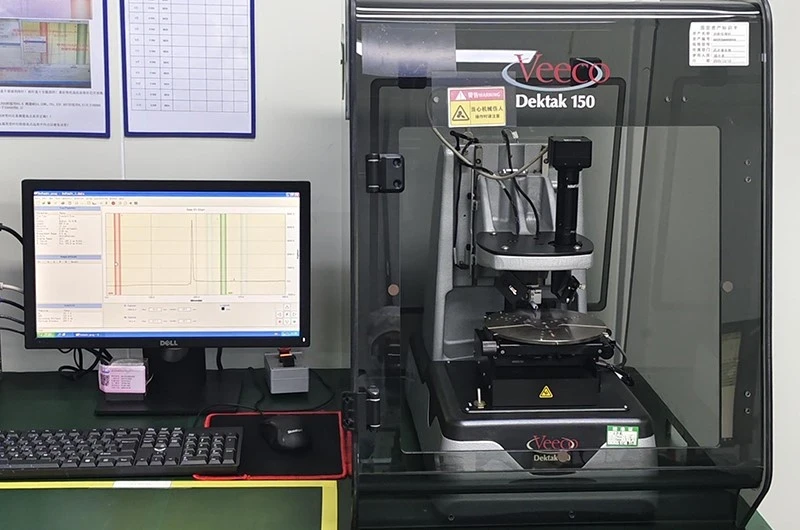
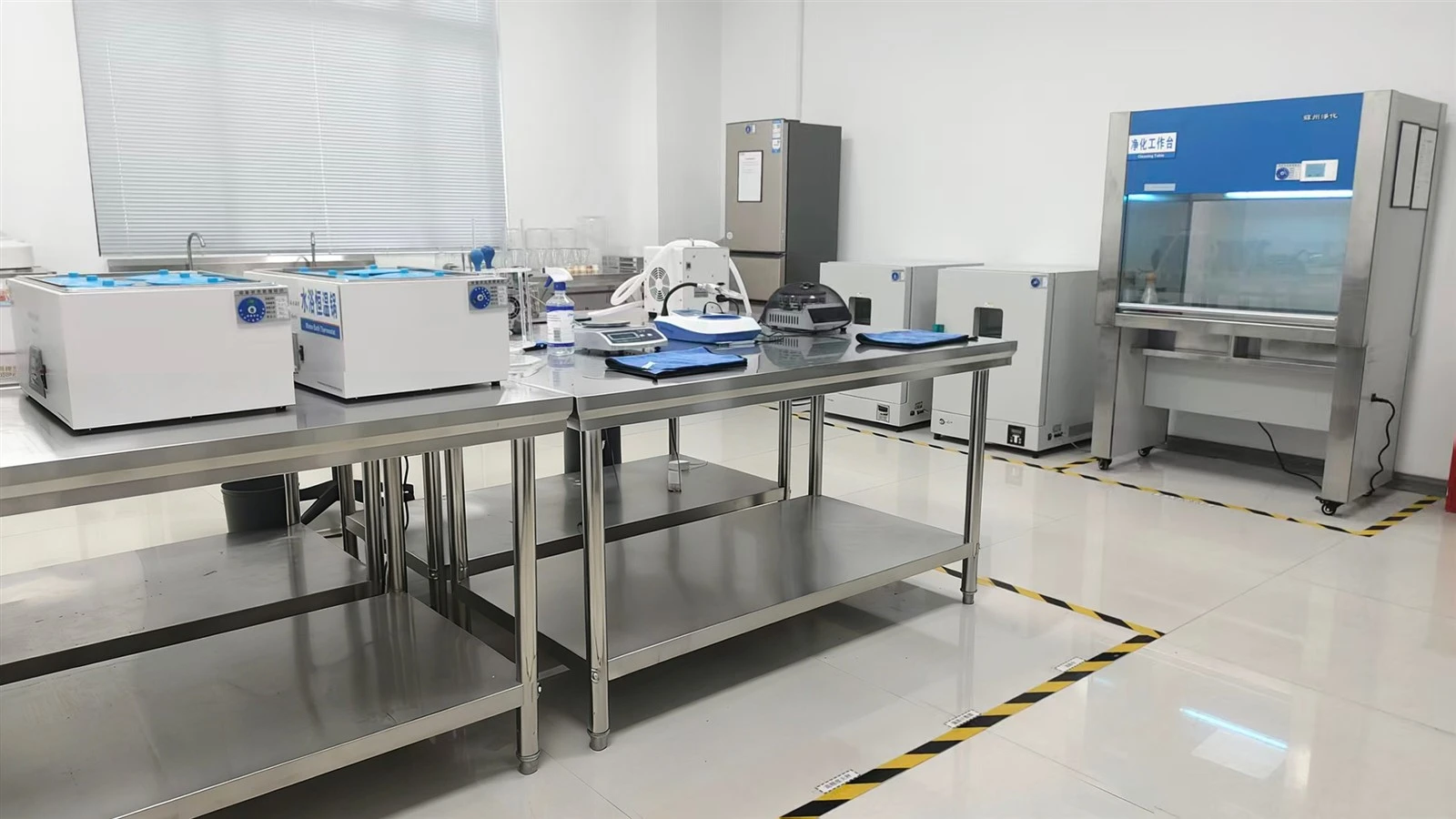
An integrated validation system should connect three testing capabilities: photochemical testing for material and optical stability, microbiological testing for actual disinfection performance, and reliability testing for environmental resistance and long-term operating stability. These platforms allow engineers to move beyond component-level measurements and evaluate prototype performance under increasingly realistic application conditions, with test results informing subsequent design improvements.


Vertical Integration From AlGaN Epitaxy to Complete Systems
Control over AlGaN epitaxial growth, chip fabrication, LED packaging, module production, and complete system integration enables engineering teams to coordinate material selection, optical design, thermal management, and electrical performance throughout product development. AEC-Q102 qualification for applicable LED components and an IATF 16949 quality management system can further support automotive-grade component reliability and manufacturing consistency, although neither replaces validation of the finished equipment.


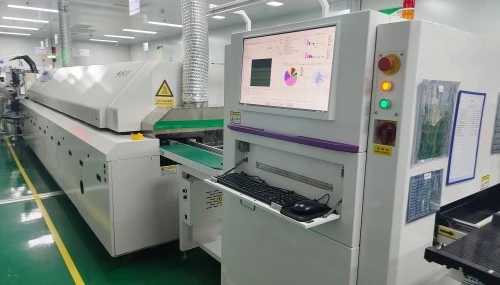
AOI System for 100% automated defect detection
System-Level Validation Across Three UV LED Applications
Different UV LED applications introduce different operating conditions, so validation requirements must be adapted to the actual equipment, treatment process, and target performance.
UV LED Water Disinfection Systems
Water disinfection systems require validation across different flow rates, UV transmittance levels, reactor geometries, and hydraulic conditions because these factors determine how much UV energy reaches microorganisms during treatment. For systems handling approximately 0.5–50 L/min or 3–120 m³/h, engineers must evaluate flow distribution, effective UV dose, and microbial reduction under representative operating conditions rather than relying on laboratory irradiance measurements alone.
Automotive UV LED Systems
Automotive UV LED products must withstand temperature fluctuations, humidity, vibration, and electrical variations throughout their intended service environments. AEC-Q102-qualified components provide an established reliability foundation, but the integrated system must still undergo application-specific validation to confirm that its optical output, electrical operation, and mechanical structure remain stable after environmental exposure.
Industrial UV LED Curing Systems
Industrial UV LED curing equipment requires consistent irradiance across the working area to achieve uniform curing depth and reliable bonding or printing results at production-line speeds. Validation should examine irradiation distance, optical uniformity, thermal management, and compatibility with specific inks, coatings, or adhesives to ensure that the equipment meets actual production requirements.
For OEM manufacturers developing these applications, UVLEDTEK provides vertically integrated capabilities spanning AlGaN epitaxy, chip fabrication, LED packaging, and complete UV LED system development. Its in-house optical, microbiological, and reliability testing platforms support simulation-driven engineering, prototype evaluation, and application-level validation, allowing customers to work with an engineering partner rather than relying solely on a standalone module supplier.

Your End-to-End Partner
Conclusion
Successful UV LED product development depends on more than meeting individual component specifications; it requires consistent performance across optical, thermal, electrical, material, and environmental conditions. System-level validation helps OEM manufacturers identify engineering risks earlier, reduce repeated design iterations, improve production reliability, and shorten time-to-market. Contact our engineering team with your target wavelength, optical output, application environment, and equipment requirements to discuss your UV LED development project.
Discuss Your UV LED Development Project