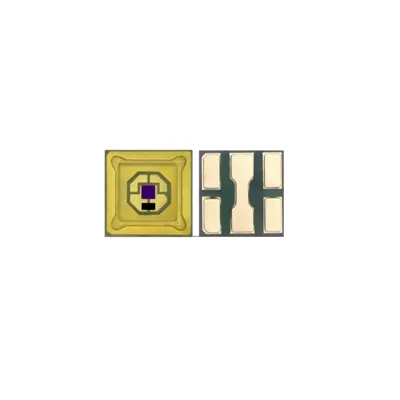
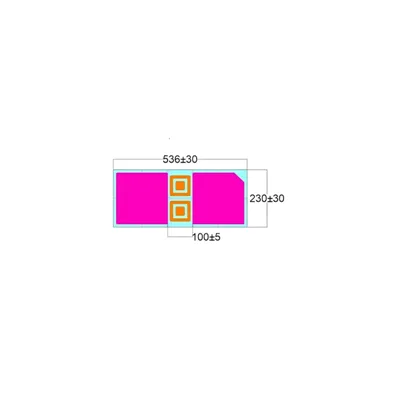
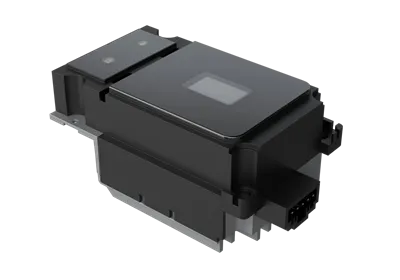
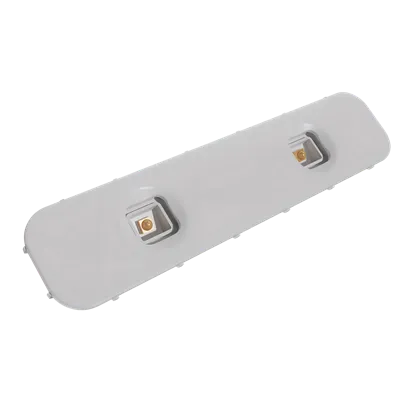
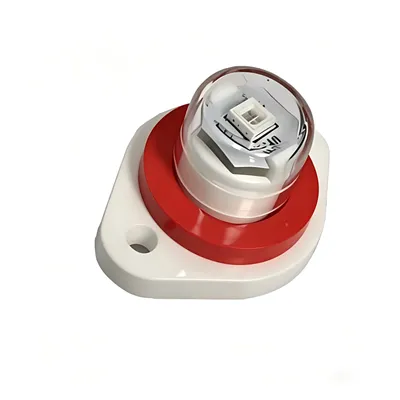
Recently, the independently developed UVC LED products of UVLEDTEK have successfully passed the AEC-Q102 automotive-grade certification, marking a key technological breakthrough for China in the field of automotive-grade ultraviolet semiconductors.
This achievement not only demonstrates that UVLEDTEK's UVC LED products have reached internationally leading levels of reliability and stability in automotive electronics applications, but also signifies a shift for Chinese enterprises in automotive-grade UVC LED technology from "following" to "leading."
As a National "Little Giant" specialized and innovative enterprise, UVLEDTEK has long established a stringent full-industry-chain quality control system. Built on the ISO 9001 quality management system, the company had already passed the IATF 16949 automotive industry quality management certification in 2023. The successful AEC-Q102 certification further consolidates its leading position in the field of automotive electronic core components.


The growing importance of in-cabin health protection has made UVC LED sterilization a key technology for the automotive industry. As vehicles increasingly function as a "third living space," enclosed cabins used for more than 2.5 hours per day face serious microbial contamination challenges. Data shows that high-touch surfaces such as steering wheels and central control screens can carry bacterial levels up to five times higher than a toilet seat, while prolonged use of air conditioning systems can increase microbial concentration by more than 300%. In the post-pandemic era, consumer attention to in-car biological safety has risen significantly, making a healthy cabin a core consideration in vehicle purchasing decisions.
The UVC LED technology of UVLEDTEK uses the 265–280 nm deep ultraviolet band to precisely disrupt the DNA/RNA structures of microorganisms. It achieves an instant sterilization rate of up to 99.9% against multiple pathogens, including H3N2 influenza virus and Escherichia coli. Compared with traditional chemical disinfection methods, it offers significant advantages such as zero residue, a service life of up to 20,000 hours, and low power consumption, making it a preferred solution for automotive cabin health systems.
The system can complete full-vehicle air circulation sterilization within 15 minutes. Combined with automated start-stop control technology, it enables a "clean upon entry" experience. The solution has already gained adoption from automakers such as BYD and Chery Automobile, and is increasingly being integrated as a standard feature in automotive health configurations.

Core Technological Breakthroughs
Establishing a Benchmark for Automotive-Grade Application Scenarios
AEC-Q102 certification is one of the most stringent reliability standards in the automotive electronics component sector. It includes extreme test conditions such as thermal shock from -40°C to 100°C, powered aging at 100°C, 85/85 damp heat powered aging (85°C/85% RH), corrosive gas testing (H₂S/SO₂/NO₂/Cl₂), and 8000V electrostatic discharge testing. These conditions ensure stable operation of components under complex environments for more than 10 years.
With its core technologies, UVLEDTEK not only meets these standards but also achieves multiple performance breakthroughs beyond industry benchmarks.
01. Full-spectrum chip design capability: breaking wavelength precision barriers
The independently developed MOCVD epitaxial growth process enables UV LED chip optical power to reach 150mW @ 350mA, significantly exceeding the industry average. Through advanced epitaxial wafer structural design, the company can achieve precise fabrication of chips across the 260–340nm wavelength range.
Combined with an automated sorting system and optical simulation design, the wavelength deviation of integrated light sources is controlled within ±1nm (compared to the industry standard of ±5nm), while ultraviolet irradiation energy uniformity exceeds 95%.
This chip-level capability ensures stable sterilization performance across different operating conditions, fundamentally securing reliability in automotive-grade applications.

02. Scenario-based Opto–Mechatronic Integration
Defining Three Core Application Paradigms
UVLEDTEK advances opto-electro-mechanical co-design to establish three core automotive UVC LED application scenarios:
• Embedded sterilization module for automotive air-conditioning systems
Targeting the complex airflow dynamics inside vehicle HVAC ducts, the system integrates optical simulation with CFD fluid dynamics analysis to develop a low-turbulence structural design.
While ensuring airflow loss remains below 5%, it achieves UV irradiance of ≥2 mJ/cm² inside the air duct, enabling a 99.9% sterilization rate for circulating air. The solution is compatible with multiple HVAC architectures and has become a preferred choice for high-end models of mainstream automakers.
• Intelligent antibacterial solution for in-vehicle refrigerators
An innovative dynamic power regulation algorithm is integrated to automatically adjust UV dosage based on refrigerator load conditions. This enables precise control of disinfection intensity while maintaining food-grade antibacterial performance.
Compared with conventional solutions, energy consumption is reduced by 40%, fully meeting the stringent low-power requirements of electric vehicles.
• Dynamic cabin surface sterilization system
Using flexible UV light source packaging technology, a curvature-adaptive sterilization module is developed for high-contact surfaces such as steering wheels and central control screens.
Combined with human presence sensing technology, it enables an "sterilization when unoccupied" active protection mode. The system achieves a 99.9% surface bacterial elimination rate, filling the technological gap in dynamic scenario-based disinfection applications.

03. High-Reliability Packaging Process
Breaking the limits of automotive-grade environmental adaptability
UVLEDTEK adopts aluminum nitride (AlN) ceramic substrate packaging technology. Through finite element analysis, the stress distribution of bonding wires is optimized, improving solder joint fatigue resistance by 60%.
With a proprietary hermetic sealing technology and a specially developed high-temperature and high-humidity resistant UVC chip, the LED device passes 1,000 hours of 85°C / 85% RH powered damp-heat aging tests with zero failure. The protection level reaches IP67, and the packaging also passes automotive salt spray testing, ensuring stable operation for over 10 years under extreme conditions. Overall performance significantly exceeds AEC-Q102 certification requirements.
From Technological Leadership to Ecosystem Building
Opening a new era of automotive health technology
The successful certification marks that Chinese enterprises have regained the right to define application scenarios in the automotive-grade UVC LED field. UVLEDTEK's solutions have achieved deep integration with mainstream vehicle ECU systems, supporting OTA-based remote sterilization strategy upgrades, and driving the evolution of smart cabins from standalone hardware configurations to intelligent health protection systems.
Industry forecasts indicate that by 2025, global penetration of UVC sterilization modules in new vehicles will exceed 30%, and may surpass 50% in the new energy vehicle market, forming a hundred-billion-level niche market.
As the only domestic supplier with full industrial-chain capabilities in UV LED technology, UVLEDTEK is accelerating the deployment of integrated UVC LED and photocatalytic sterilization solutions. It is developing customized modules for scenarios such as shared mobility and premium MPVs, driving UVC LED technology from a "functional module" toward a core component of a broader health ecosystem.
Looking ahead, the company will leverage its dual quality systems-ISO 9001 and IATF 16949-to build a full lifecycle traceability system covering chip design, process control, and end-use applications, providing global automakers with safer and more reliable automotive-grade health solutions.