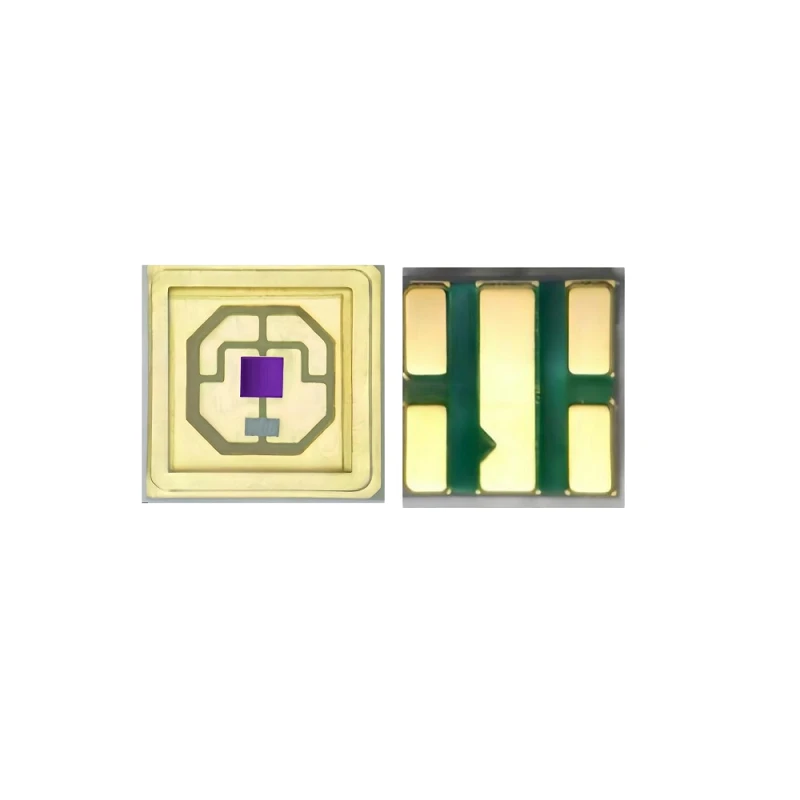
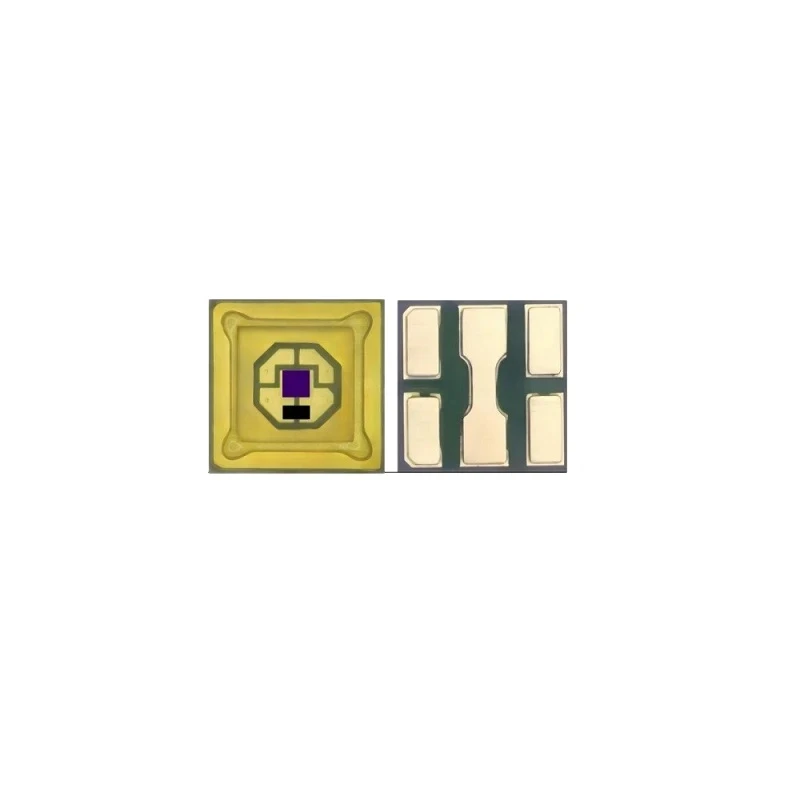
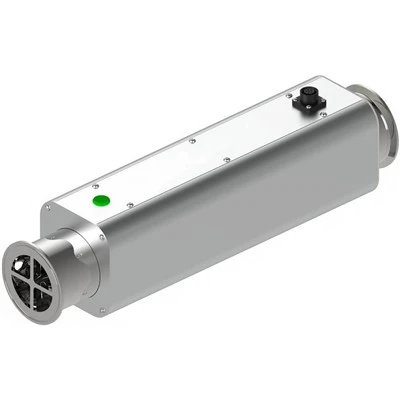
Recently, UVLEDTEK's independently developed UVC LED products have successfully obtained AEC-Q102 automotive-grade certification, marking a key technological breakthrough for a Chinese company in the field of automotive-grade ultraviolet semiconductors. This achievement not only signifies that UVLEDTEK's UVC LED products have achieved world-leading level of reliability and stability in automotive electronics applications, but also marks that Chinese enterprises-from catching up to leading the way in automotive UVC LED technology.
As a national-level specialized and sophisticated "Little Giant" enterprise, UVLEDTEK has long established a stringent product quality control system covering the entire industry chain. Building on the ISO 9001 Quality Management System certification, the company had already obtained IATF 16949 international quality management system certification for the automotive industry as early as 2023. The recent achievement of AEC-Q102 certification has further consolidated its leading technological position in the field of core automotive electronic components.

I. Growing Demand for In-Cabin Health Protection
UVC LED: The Top Choice for In-Cabin Sterilization
As cars increasingly become the "third living space," the enclosed cabin-used for over 2.5 hours daily-are facing challenges from severe microbial contamination. Data shows that the bacterial density on high-touch surfaces such as steering wheels and touchscreens can be over five times higher than that of toilet seats. The microbial concentration in air conditioning systems will even surge by as much as 300% after prolonged use. In the post-pandemic era, consumers' attention to in-cabin biosafety has significantly increased, making a healthy cabin environment a core consideration in vehicle purchases.

UVLEDTEK's UVC LED technology operates within the 265–280nm deep ultraviolet spectrum, precisely destroy the DNA/RNA structures of microorganisms. It achieves an instant sterilization rate of up to 99.9% against dozens of pathogens, including H3N2 influenza virus and E. coli. Compared with traditional chemical disinfection methods, its advantages of being residue-free, boasting an ultra-long service life of 20,000 hours and featuring low power consumption make it the preferred solution for healthy automotive cabins. With the ability to complete full-vehicle air circulation sterilization in just 15 minutes and equipped with automated start-stop technology to realize "clean cabin upon entry," UVLEDTEK's solution has gained recognition from many automakers such as BYD and Chery, and is becoming a standard feature in vehicle brands.
II. Core Technological Breakthrough
A Technical Benchmark Established for Automotive-Grade Application Scenarios
The AEC-Q102 certification, one of the most stringent reliability standards in the automotive electronics components sector, encompasses rigorous testing conditions such as thermal cycling from -40℃ to 100℃, powered aging at 100℃ high temperature, dual 85% humidity and temperature environment aging, corrosion resistance tests in H2S/SO2/NO2/Cl2 gas environments, and 8000V discharge testing. These ensure component stability under complex operating conditions for over 10 years. Leveraging its core technologies, UVLEDTEK not only meets these standards but also surpasses them in multiple aspects.
01,Full-Band Chip Design Capability, Breaking Through the Barrier of Wavelength Precision Control
The independently developed MOCVD epitaxial growth process enables the UVC LED chip to achieve an optical power of 150mW@350mA, far exceeding the industry average. By designing the epitaxial wafer structure, the company enables precise production of chips across any wavelength from 260nm to 340nm. Combined with the fully automatic sorting system and optical simulation design, the wavelength deviation of the integrated light source can be controlled within ±1nm (industry standard: ±5nm), and the UV irradiation uniformity>95%. This ensures stable sterilization performance under varying operating conditions at the chip level.

02,Scenario-Based Optomechatronic Collaboration, Defining Three Core Application Paradigms
· Embedded Disinfection Module for Air Conditioning Systems:
Aiming at the complex flow field of automotive air conditioning ducts, a low-turbulence structure is developed through the coupled analysis of optical simulation and CFD fluid mechanics. While ensuring the air conditioning air volume attenuation<5%, it achieves an ultraviolet radiation intensity of ≥2mJ/cm² in the duct and a circulating air sterilization rate of 99.9%. Compatible with various air conditioning system layouts, it has become the preferred choice for high-end models of mainstream automakers.
· Intelligent Antimicrobial Solution for Vehicle Refrigerators
This solution innovatively integrates a dynamic power regulation algorithm that automatically adjusts the UV dosage based on the refrigerator's load, precisely controlling the sterilization intensity. While ensuring food-grade antimicrobial efficacy, it reduces energy consumption by 40% compared to conventional solutions, perfectly meeting the stringent low-power requirements of electric vehicles.
· Dynamic Disinfection System for Cabin Surfaces
Adopting flexible ultraviolet light source packaging technology, a curvature-adaptive disinfection module is developed for high-touch areas such as steering wheels and central control screens. Through human presence sensing technology, it realizes an active protection mode of "disinfection on departure". The surface bacteria removal rate reaches 99.9%, filling the gap in disinfection technology for dynamic scenarios.

03,High-Reliability Packaging Process, Breaking Through the Limit of Automotive-Grade Environmental Adaptability
Utilizing AlN ceramic substrate packaging technology, UVLEDTEK optimizes bond-wire stress distribution through finite element analysis, enhancing solder joint fatigue resistance by 60%. With proprietary hermetic packaging technology combined with exclusive UVC chip technology resistant to high temperature and humidity, the LED modules achieve zero failures after 1,000 hours of 85°C/85% RH damp-heat powered aging tests, while reaching an IP67 protection rating. Additionally, the hermetic packaging passes automotive salt spray tests, ensuring stable operation of components for over 10 years under various extreme conditions. These technical parameters comprehensively exceed the requirements of the AEC-Q102 certification.
III. From Technological Leadership to Ecosystem Building
Ushering in a New Era of Automotive Health Technology
The passing of this certification signifies that Chinese enterprises have redefined the application standards in the field of automotive-grade UVC LED. UVLEDTEK's technological solutions have achieved in-depth integration with the on-board ECU systems of mainstream automakers, supporting OTA remote disinfection strategy upgrades and promoting the evolution of healthy cabins from a single hardware configuration to an intelligent protection system. According to industry forecasts, by 2025, the penetration rate of UVC sterilization modules in new global vehicles will exceed 30%, and is expected to reach over 50% in the new energy vehicle market, forming a ten-billion-level niche market.
As the only supplier with full industrial chain capabilities in UV LED technology in China, UVLEDTEK is accelerating the layout of UVC LED and photocatalyst synergistic sterilization solutions. It develops customized modules for segmented scenarios such as shared mobility and premium MPVs, advancing UVC LED technology from a "functional module" to a "core component of a health ecosystem." Moving forward, leveraging its dual quality management systems(ISO 9001 and IATF 16949), the company will establish a full-lifecycle traceability system covering chip design, process control, and end applications, providing safer and more reliable automotive-grade health solutions to global automakers.